
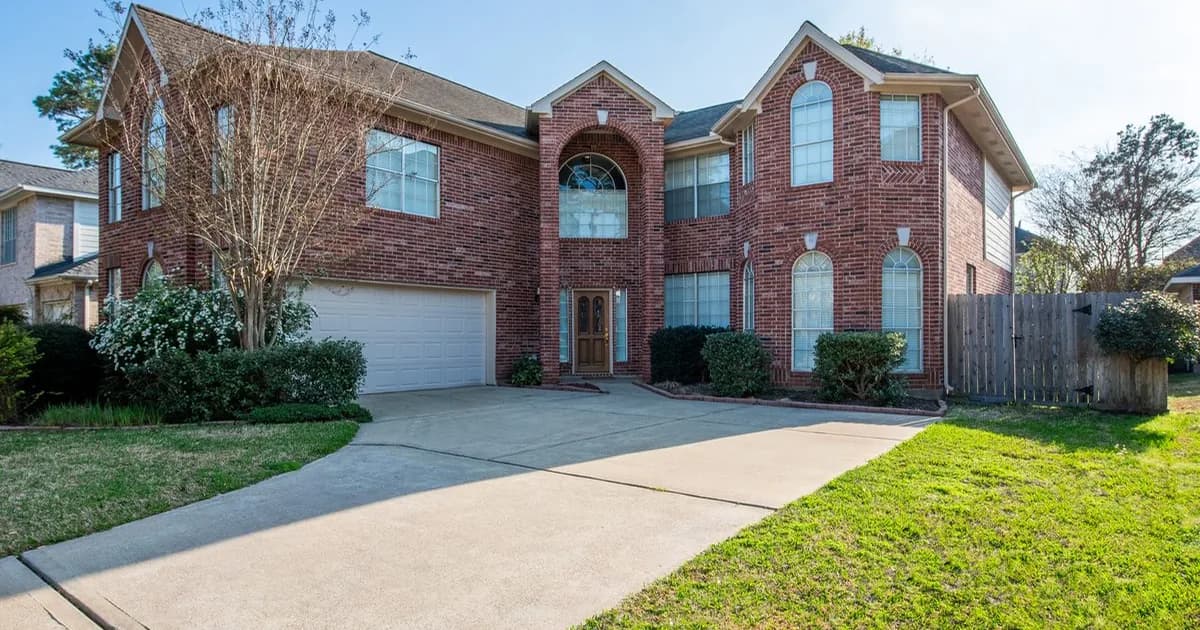
Property Tax Protest in Harris County (2026): The HCAD Guide for Houston Landlords
How to protest a Harris County property tax appraisal at HCAD: the May 15 deadline, the grounds that win, the ARB hearing, and what to do if you miss it.
 Flat Fee Landlord TeamMay 26, 2026Updated October 11, 202617 min read
Contents▾
- The short answer
- When is the Harris County protest deadline?
- Is your rental actually in Harris County?
- What can you protest?
- Who has to prove the value?
- How to file with HCAD
- Evidence that works for a rental
- Informal review and the ARB hearing
- If you lose at the ARB
- What if I missed the May 15 deadline?
- The circuit breaker limitation and 2027
- Is a protest worth your time?
- Where a flat-fee manager fits
- Frequently asked questions
- Sources and last reviewed
How to protest a Harris County property tax appraisal at HCAD: the May 15 deadline, the grounds that win, the ARB hearing, and what to do if you miss it.
Free Instant Rent Estimate
What could your property rent for?
Enter your property address and see an instant comps-based rent estimate — right here, no waiting.
If you own a rental in Harris County, you can protest its appraised value with Harris County's appraisal district, HCAD, every year, and the deadline is May 15 or 30 days after your appraisal notice is delivered, whichever is later. The protest goes to HCAD's Appraisal Review Board, and the district, not you, carries the burden of proving its value. That deadline comes from Texas Tax Code Section 41.44, and it is the single most valuable date on a Houston landlord's calendar.
This guide is the Harris County playbook for rental owners: the deadline and its exceptions, which appraisal district your house is actually in, the grounds you can protest on, who has to prove what, how to file with HCAD, what evidence works for a rental, what happens at the hearing and after it, and how to decide whether a protest is worth your afternoon. Every rule below is cited to the statute or the agency that publishes it.
Updated October 2026. The 2026 protest window has closed for most owners. This version was rewritten for the 2027 season, corrected one statement from the earlier version about late protests (see the deadline section), and now covers appeals and binding arbitration. It is general information, not legal or tax advice.
The short answer
File by May 15, protest on both market value and unequal appraisal, and make the district prove its number. Those three moves cover most of what a Houston rental owner needs to do.
| Question | Answer for a Harris County rental | Source |
|---|---|---|
| Deadline | May 15 or 30 days after notice delivery, whichever is later | Tax Code Sec. 41.44(a) |
| Weekend or holiday deadline | Next regular business day is timely | Tax Code Sec. 1.06 |
| Where to file | HCAD Appraisal Review Board, online or by mail | hcad.org |
| Main grounds | Appraised value; unequal appraisal | Tax Code Sec. 41.41(a) |
| Who must prove the value | The appraisal district, by a preponderance of the evidence | Tax Code Sec. 41.43(a) |
| District's evidence | Yours on request; notice of that right at least 14 days before the hearing | Tax Code Sec. 41.461 |
| Appeal after the ARB | District court petition within 60 days of notice of the final order | Tax Code Sec. 42.21(a) |
| Alternative to court | Binding arbitration if the value set by the order is $5 million or less | Tax Code Sec. 41A.01 |
When is the Harris County protest deadline?
The deadline is May 15 or the 30th day after your appraisal notice was delivered, whichever is later. Texas Tax Code Section 41.44(a) sets that rule for every appraisal district in the state, so HCAD, Fort Bend, Montgomery, Brazoria and Galveston all run on the same clock. If the notice arrived late, your deadline moves with it. Check the delivery date and do the math rather than assuming May 15.
When the last day lands on a weekend or holiday, Tax Code Section 1.06 says the act is timely if performed on the next regular business day. In practice, do not lean on that. File early in May.
A correction to the earlier version of this guide. We previously wrote that there is no general late-protest procedure. That was wrong. Section 41.44(b) says an owner who files after the deadline, but before the Appraisal Review Board approves the appraisal records, is entitled to a hearing if the owner shows good cause as determined by the board. Good cause is the board's call, not yours, and the window closes when the records are approved. Subsections (c-1) and (c-2) add narrow late-filing paths for owners working offshore in the Gulf of Mexico across the deadline and for owners on active military duty outside the United States. If none of those fit, see the missed-deadline section below.
Is your rental actually in Harris County?
A Houston mailing address does not tell you which appraisal district values your house. Greater Houston spreads across five appraisal districts, and several suburbs straddle county lines. File with the wrong district and you have not filed at all. Look up the parcel on the appraisal district's own site before you build a case.
| County | Appraisal district | Houston-area places to double-check |
|---|---|---|
| Harris | HCAD | Houston, Bellaire, West University Place, Cypress, Spring, Tomball, Atascocita |
| Fort Bend | Fort Bend County's appraisal district | Sugar Land, Missouri City, Richmond, parts of Katy and Pearland |
| Montgomery | Montgomery County's appraisal district | Conroe, most of The Woodlands |
| Brazoria | Brazoria County's appraisal district | Much of Pearland, Alvin, Manvel |
| Galveston | Galveston County's appraisal district | League City, parts of Friendswood |
Pearland spreads across Brazoria, Harris and Fort Bend counties, and Friendswood across Galveston and Harris. Katy and The Woodlands also cross county lines. Each district runs its own Appraisal Review Board and its own online portal, but the deadline, the grounds and the burden of proof below are the same statewide because they come from the Tax Code.
What can you protest?
Texas Tax Code Section 41.41(a) lists the actions an owner can protest, and for a rental the two that matter are the appraised value and unequal appraisal. Check both on the protest. There is no cost to raising both, and they are decided on different tests.
| Ground in Sec. 41.41(a) | What it means for a rental owner |
|---|---|
| Determination of appraised value | The district's number is higher than what the house would sell for on January 1 |
| Unequal appraisal | Your house is appraised at a higher ratio than comparable properties |
| Inclusion on the appraisal records | The property should not be on the roll as described |
| Denial of a partial exemption | Rarely relevant to a rental, since rentals are not residence homesteads |
| Circuit breaker limitation denial | The district decided your property does not qualify for the limitation |
| Taxing units | The wrong taxing units are listed for the parcel |
| Ownership | You are listed as owner of property you do not own |
| Any other adverse action | Any other action of the chief appraiser, district or board that applies to and adversely affects you |
Unequal appraisal is a protest that your property is appraised at a higher ratio to its value than comparable properties, measured against the median. It is often the stronger argument in a Houston subdivision where similar houses carry different appraisals, because the comparison set comes from the district's own records.
Who has to prove the value?
The appraisal district does. Section 41.43(a) says the district has the burden of establishing the value of the property by a preponderance of the evidence presented at the hearing, and if it fails to meet that standard, the protest is determined in favor of the owner. You still bring evidence, because the panel weighs both sides, but the district cannot simply point at its notice.
Two rules raise the stakes in your favor:
- Certified appraisal, property worth $1 million or less. Under Section 41.43(a-1), if you file a certified appraisal that supports your value with the board, and deliver a copy to the chief appraiser, at least 14 days before the first day of the hearing, the district must prove its value by clear and convincing evidence. That is a higher bar. For a mid-priced Houston rental, the cost of an appraisal is worth weighing against the value gap.
- Unequal appraisal. Under Section 41.43(b), an unequal-appraisal protest is decided for the owner unless the district shows the property's appraisal ratio is equal to or less than the median level of appraisal for a sample of properties, a sample of similarly situated properties, or a reasonable number of comparable properties appropriately adjusted.
How to file with HCAD
Most Harris County owners file online through HCAD's iFile protest service, reached from hcad.org. HCAD's site also lists an electronic filing and notice system for owners, an iSettle service alongside iFile, a protest hearings database, and instructions for remote hearings. The details of each portal change from year to year, so read HCAD's current instructions and its published ARB hearing rules and procedures for the year before you file.
If you prefer paper, mail or deliver a written notice of protest to HCAD at 13013 Northwest Freeway, Houston, Texas 77040-6305. HCAD's telephone information center is (713) 957-7800, open 8:00 AM to 5:00 PM, Monday through Friday, and HCAD lists Saturday hearings in June and July. Keep proof of the date you filed.
A filing checklist for a rental owner:
- Confirm the parcel is in Harris County and note the account number from your notice.
- Note the notice delivery date and calculate your real deadline under Section 41.44(a).
- File the protest, checking both the value and the unequal-appraisal grounds.
- When the hearing notice arrives, request the district's evidence in writing under Section 41.461.
- Assemble your evidence packet, and if you are commissioning a certified appraisal, deliver it at least 14 days before the hearing.
- Calendar the hearing date and any settlement deadline the district gives you.
If you want someone else to handle it, Texas lets an owner appoint an agent for property tax matters, commonly a property tax consultant. Read the agreement and the fee basis carefully before you sign.
Evidence that works for a rental
The best evidence is whatever shows what your house was worth on January 1, in the condition it was actually in. A rental owner has documentation that an owner-occupant usually does not, and that is an advantage.
| Evidence | Supports | Notes |
|---|---|---|
| Closed sales of comparable houses near January 1 | Market value | Same subdivision or school zone where possible; adjust for size, age and condition |
| Appraised values of similar nearby houses from the district's records | Unequal appraisal | Build the comparison from HCAD's own property search |
| Dated photos and repair estimates | Market value | Foundation, roof, flood or deferred-maintenance issues the district did not account for |
| Rent history, vacancy and operating costs | Market value (income view) | Shows what the house actually earns, not what a model assumes |
| Certified appraisal (property worth $1 million or less) | Market value | Raises the district's burden if delivered at least 14 days before the hearing |
| The district's own evidence, requested under Sec. 41.461 | Both | Look for wrong square footage, wrong condition, or comparables that are not comparable |
Automated online estimates are weak evidence on their own. A panel wants closed sales, documented condition, and arithmetic it can follow.
Informal review and the ARB hearing
Most protests move through two stages: an informal conversation or settlement offer from the district, and, if you do not settle, a formal hearing before the Appraisal Review Board. The Appraisal Review Board is an independent panel that hears evidence from the owner and the district and issues a written order setting the value.
Before the hearing, Section 41.461 requires the chief appraiser, at least 14 days ahead, to give you the Comptroller's taxpayer assistance pamphlet, tell you that you may request a copy of the data, schedules, formulas and other information the district will introduce, and give you the board's hearing procedures. Use that request. The district's evidence often reveals an error you can win on, such as the wrong square footage or a comparable that sold with a pool and a new roof.
If the district offers a settlement value, compare it against your evidence, not against the notice. Accepting a settlement usually ends the protest for that year, so read what you are signing. If you go to hearing, keep your presentation short: your value, your three best comparables, the condition evidence, and why the district's comparables do not fit.
If you lose at the ARB
You have two paths: a district court appeal or, for many rentals, binding arbitration.
- District court. Section 42.21(a) requires a petition for review to be filed with the district court within 60 days after you receive notice that a final order has been entered. Failure to file on time bars the appeal.
- Binding arbitration. Section 41A.01 lets an owner choose binding arbitration instead of a court appeal for an order deciding a value or unequal-appraisal protest, if the property is the owner's residence homestead or the value set by the order is $5 million or less. A single-family rental will almost always fall under that value threshold. Arbitration has its own filing steps, so read the Texas Comptroller's current arbitration instructions before choosing it.
For a single rental, the value gap left after an ARB hearing is often too small to justify court. Run the numbers in the section below before you escalate.
What if I missed the May 15 deadline?
You may still have options, but each one is narrow.
| Path | When it applies | Deadline |
|---|---|---|
| Late protest for good cause, Sec. 41.44(b) | You can show good cause, as determined by the board, for missing the deadline | Before the ARB approves the appraisal records |
| Failure-of-notice protest, Sec. 41.411 | The chief appraiser or ARB failed to provide or deliver a notice you were entitled to | Payment requirements of Sec. 41.4115 must be met |
| Substantial-error correction, Sec. 25.25(d) | The appraised value of non-homestead property exceeds the correct value by more than one-third | Before the taxes become delinquent |
| Clerical and similar errors, Sec. 25.25(c) | Clerical errors affecting liability, multiple appraisals, property that does not exist as described, or the wrong owner on January 1 | Any of the five preceding years |
The one-third test matters for landlords. For a residence homestead, Section 25.25(d) uses one-fourth. A rental is not a homestead, so the error must exceed one-third of the correct value, which is a high bar. A missed deadline is expensive. Put the notice review on your calendar for April.
The circuit breaker limitation and 2027
The circuit breaker limitation is a temporary Texas cap on how fast the appraised value of qualifying non-homestead real property can rise from year to year. The Texas Comptroller says it applies only to real property that is not a residence homestead, valued at $5,320,000 or less for the 2026 tax year, excluding land receiving special appraisal such as agricultural or timber land, and that it expires December 31, 2026.
For a Houston rental owner that has two consequences. First, a denial of the limitation is itself a protestable action under Section 41.41(a). Second, 2027 is the first year in which, unless the Legislature acts, nothing slows an appraisal increase on your rental except the market and your protest. Homesteads keep their own 10% annual cap, which the Comptroller describes separately, but rentals do not qualify for it. That makes the spring 2027 protest season more important than any recent one.
Is a protest worth your time?
Multiply the value reduction you can realistically support by your combined tax rate. That is your annual saving. Your combined rate is printed on your tax statement and varies across Harris County by school district, city, and any municipal utility district.
| Value reduction | Annual saving at an illustrative 2.0% combined rate | Annual saving at an illustrative 2.5% combined rate |
|---|---|---|
| $10,000 | $200 | $250 |
| $25,000 | $500 | $625 |
| $50,000 | $1,000 | $1,250 |
The rates in that table are for illustration only; use the rate on your own statement. If you hire a consultant, subtract the fee. If the house is worth $1 million or less and the gap is large, compare the cost of a certified appraisal with the saving. And remember the value you win becomes the starting point for next year's conversation with the district, which is one reason owners protest every year rather than only when the notice is shocking.
Where a flat-fee manager fits
Flat Fee Landlord does not file property tax protests. Filing is the owner's job, or the job of an agent the owner appoints. We are your property manager, not your tax agent, and we will not pretend otherwise.
What we do produce is the record a good protest leans on. You get an itemized owner statement every month and 24/7 online access to your statements, documents and maintenance requests, so the rent history, vacancy and repair invoices for the year are in one place when May comes around. Across Harris, Fort Bend, Montgomery, Brazoria and Galveston counties we price from live comparables, lease quickly and keep the house maintained, which is what protects your return after the tax bill is set.
We charge a flat monthly fee, starting at $139/mo on annual billing, not a percentage of rent. When taxes push you to raise rent, the increase goes to you: your management cost should not rise just because your rent did.
If you want to see what your Houston rental should be earning against this year's tax bill, request a free rental analysis.
Related reading: our statewide property tax protest guide covers the Texas rules outside Harris County, Average Rent in Houston 2026 covers the rent side of the same equation, and Landlord Insurance in Texas covers the other fixed cost that rose fastest. For the full local picture, see our Houston property management page.
Frequently asked questions
When is the property tax protest deadline in Harris County?
May 15 or the 30th day after your appraisal notice is delivered, whichever is later, under Tax Code Section 41.44(a). If the last day is a weekend or legal holiday, Section 1.06 makes the next regular business day timely.
Can I still protest after May 15 in Harris County?
Sometimes. Section 41.44(b) allows a hearing on a late protest filed before the ARB approves the appraisal records if you show good cause as determined by the board. Section 25.25(d) allows a motion to correct a non-homestead overappraisal of more than one-third before taxes become delinquent.
Who has the burden of proof at an HCAD protest hearing?
The appraisal district, by a preponderance of the evidence, under Section 41.43(a). For property worth $1 million or less, a certified appraisal filed at least 14 days before the hearing raises that to clear and convincing evidence under Section 41.43(a-1).
Should I protest on market value or unequal appraisal?
Usually both. They are separate grounds under Section 41.41(a) and are decided on different tests, so one can succeed when the other does not.
Can I see the evidence HCAD will use against me?
Yes, on request. Section 41.461 requires the district to tell you, at least 14 days before the hearing, that you may request the data, schedules and formulas it will introduce.
What happens if I lose my protest at the appraisal review board?
You can petition the district court within 60 days after receiving notice of the final order under Section 42.21(a), or, if the value set by the order is $5 million or less, choose binding arbitration under Section 41A.01.
Does Flat Fee Landlord file my property tax protest?
No. Filing is the owner's job or the job of an agent the owner appoints. We provide the monthly itemized owner statements and online document access that make the evidence easy to assemble.
Does the 2026 circuit breaker limitation apply to my Houston rental?
It can. The Comptroller says it covers non-homestead real property valued at $5,320,000 or less for 2026 and expires December 31, 2026.
Sources and last reviewed
Last reviewed: October 11, 2026. All statutes were fetched from the texas.public.law mirror of the Texas Tax Code, which cites the official text.
- Texas Tax Code Sec. 41.44, deadline for filing protest: https://texas.public.law/statutes/tex._tax_code_section_41.44
- Texas Tax Code Sec. 41.41, right of protest: https://texas.public.law/statutes/tex._tax_code_section_41.41
- Texas Tax Code Sec. 41.43, burden of proof: https://texas.public.law/statutes/tex._tax_code_section_41.43
- Texas Tax Code Sec. 41.461, notice of certain matters before hearing: https://texas.public.law/statutes/tex._tax_code_section_41.461
- Texas Tax Code Sec. 41.411, protest of failure to give notice: https://texas.public.law/statutes/tex._tax_code_section_41.411
- Texas Tax Code Sec. 42.21, petition for review: https://texas.public.law/statutes/tex._tax_code_section_42.21
- Texas Tax Code Sec. 41A.01, binding arbitration: https://texas.public.law/statutes/tex._tax_code_section_41A.01
- Texas Tax Code Sec. 25.25, correction of appraisal roll: https://texas.public.law/statutes/tex._tax_code_section_25.25
- Texas Tax Code Sec. 1.06, computation of time: https://texas.public.law/statutes/tex._tax_code_section_1.06
- Texas Comptroller, Valuing Property (circuit breaker limitation and homestead cap): https://comptroller.texas.gov/taxes/property-tax/valuing-property.php
- HCAD, protests and corrections page: https://hcad.org/hcad-help/protests-and-corrections/
This guide is general information, not legal or tax advice. Appraisal district procedures and portals change every year. Confirm the current process with HCAD or your county's appraisal district before you file, and consult a Texas-licensed attorney or property tax professional for a specific dispute.
2,000+
Tenants Placed
<1%
Eviction Rate
9–12 Mo
Tenant Guarantee
4.6★
Google Rating
Our Services

Flat Fee Landlord Team
Flat Fee Landlord
The Flat Fee Landlord team helps landlords across Texas and the DMV find great tenants, stay legally protected, and maximize rental income — for one flat monthly fee.
Frequently Asked Questions
When is the property tax protest deadline in Harris County?▾
May 15 or the 30th day after your appraisal notice is delivered, whichever is later, under Texas Tax Code Section 41.44(a). If the last day falls on a Saturday, Sunday or legal holiday, Section 1.06 makes a filing on the next regular business day timely. The same rule applies in Fort Bend, Montgomery, Brazoria and Galveston counties.
Can I still protest after May 15 in Harris County?▾
Sometimes. Section 41.44(b) entitles an owner who files late, but before the appraisal review board approves the appraisal records, to a hearing if the owner shows good cause as determined by the board. Separately, Section 25.25 lets an owner move to correct certain errors, including an overappraisal of more than one-third on non-homestead property, before taxes become delinquent. Neither is guaranteed, so treat May 15 as the real deadline.
Who has the burden of proof at an HCAD protest hearing?▾
The appraisal district. Under Tax Code Section 41.43(a), the district must establish the value of the property by a preponderance of the evidence presented at the hearing, and if it fails, the protest is decided in the owner's favor. For property valued at $1 million or less, an owner who files a certified appraisal at least 14 days before the hearing raises the district's burden to clear and convincing evidence under Section 41.43(a-1).
Should I protest on market value or unequal appraisal?▾
Usually both. Section 41.41(a) lists them as separate grounds: the determination of appraised value, and unequal appraisal. Under Section 41.43(b), an unequal-appraisal protest is decided for the owner unless the district shows the property's appraisal ratio is at or below the median level of appraisal for a comparison group, so it can succeed even when a market-value argument is close.
Can I see the evidence HCAD will use against me?▾
Yes, on request. Section 41.461 requires the chief appraiser, at least 14 days before the hearing, to tell you that you or your agent may request a copy of the data, schedules, formulas and other information the district will introduce at the hearing. Ask for it in writing as soon as you get that notice.
What happens if I lose my protest at the appraisal review board?▾
You can appeal to district court by filing a petition for review within 60 days after you receive notice of the final order, under Tax Code Section 42.21(a). Missing that window bars the appeal. If the property is your residence homestead or the value set by the order is $5 million or less, Section 41A.01 also lets you choose binding arbitration instead, for value and unequal-appraisal protests.
Does Flat Fee Landlord file my property tax protest?▾
No. Filing a protest is the owner's job, or the job of an agent the owner appoints, such as a property tax consultant. We are your property manager, not your tax agent. What we provide is the record a protest leans on: monthly itemized owner statements and 24/7 online access to your statements, documents and maintenance requests.
Does the 2026 circuit breaker limitation apply to my Houston rental?▾
It can. The Texas Comptroller says the circuit breaker limitation applies only to real property that is not a residence homestead, valued at $5,320,000 or less for the 2026 tax year, and that it expires December 31, 2026. A rental is not a residence homestead, so many Houston rentals qualify for 2026. Plan for 2027 as the first year without it unless the law changes.
You might also like
- Property Tax Protest in Texas (2026): The Landlord Guide, Plus Maryland, Virginia and DC AppealsMarch 17, 2026Texas property tax protest guide for landlords: the May 15 deadline, grounds that win, the 2026 circ…
- Is Texas a Landlord-Friendly State? What the Statutes Actually SayOctober 4, 2026Is Texas landlord-friendly? Mostly yes: no ordinary rent control, a 3-day notice to vacate and no vo…
- Landlord Rights in Texas: What the Law Actually Lets You DoSeptember 27, 2026Texas landlord rights by statute: set rent, screen, charge late fees, deduct from deposits, use a re…
- Landlord Insurance in Texas: What It Costs and What It Actually CoversAugust 30, 2026What landlord insurance covers in Texas, why a homeowners policy on a rental gets denied, and how Ho…
Free Instant Rent Estimate
What could your property rent for?
Enter your address — see an instant comps-based rent estimate.
- ⭐ 4.6 stars · 730+ Google reviews
- ✅ 2,000+ tenants placed
- ✅ <1% eviction rate
- ✅ Tenant assurance on eligible bundles